Vote in your Electric Cooperative
Board Elections this spring! 🌟
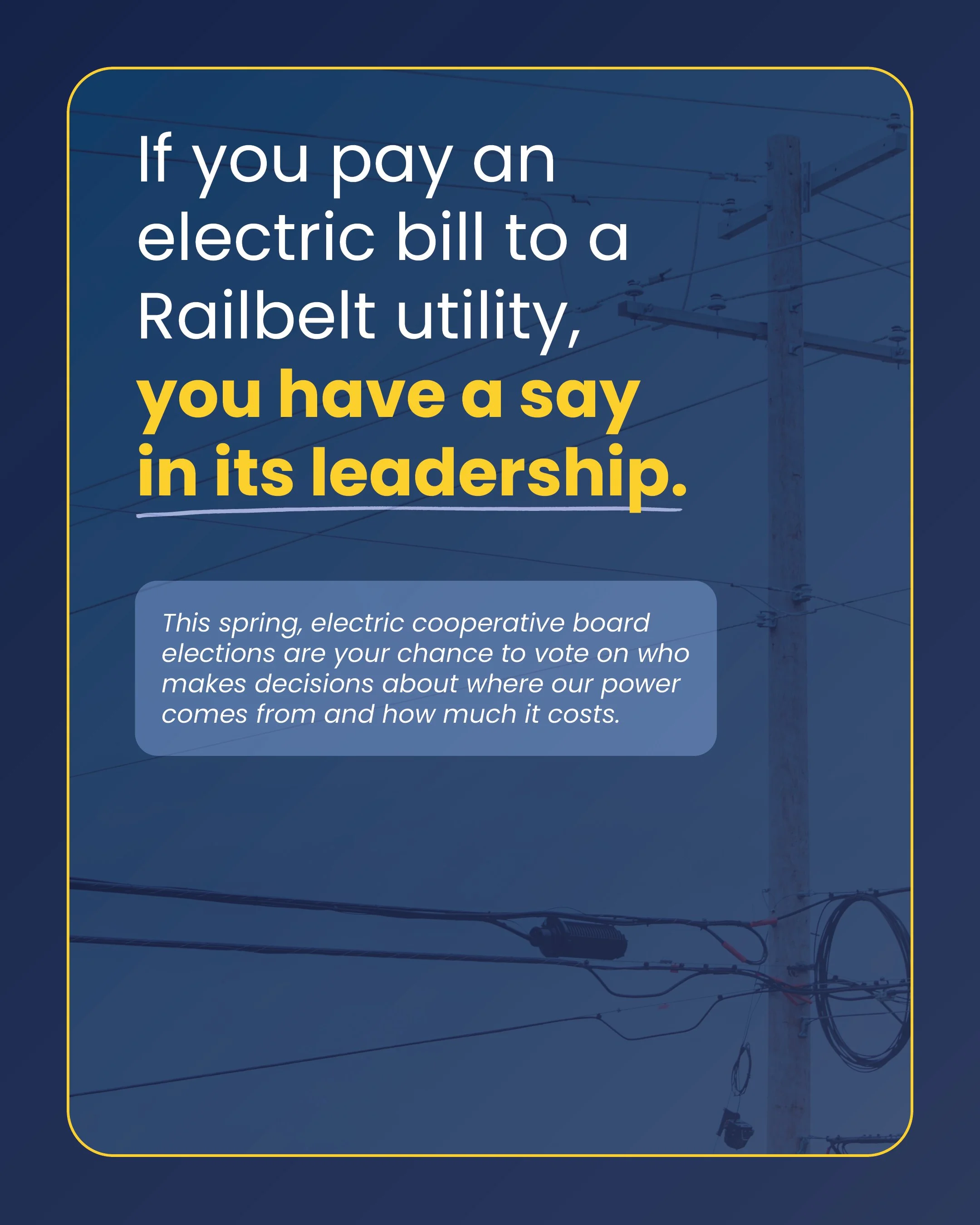
If your name is on the electric bill for your house and you live along the Railbelt, you are eligible to vote in your utility’s board elections this spring! ⚡️
Our utilities are electric cooperatives, led by boards who make key decisions every day, like where our power comes from and how much it costs. These choices matter more than ever, as most of our electricity currently comes from natural gas, and that supply is facing a serious shortfall. Your vote helps support clean, safe, and reliable energy that creates good local jobs.
These elections are often determined by just a few votes – your vote can make a huge impact in your community. Use your voice for energy democracy! 🗳️
For more information about all of the utility board elections (including candidate questionnaires!) visit the Alaska Energy Transparency Project (AETP) website.
Keeping Medical Debt Off Credit Reports: HB 178
Medical debt can happen to anyone – loss of coverage, an emergency, or even just the high cost of routine care can present unpredictable and unavoidable costs.
Credit reports are meant to reflect how someone manages borrowed money – but medical debt doesn’t function like other types of debt. Prices for healthcare are not always known in advance and medical coding errors often result in patients being billed for services that should have been covered by their insurance. In fact, consumers dispute medical collections at three times the rate of credit card debt. Regardless of errors in medical billing, financial consequences still follow that harm consumers.
AKPIRG supports HB 178 because Alaskans shouldn't be punished for an unaffordable healthcare system. While the bills passing would not not erase medical debt, nor the ability to collect on it, it would make it so folks are not punished by being classified as risks through debt incurred through unforeseen or tragic circumstances.
If you’ve been impacted by medical debt and feel comfortable sharing your experience, we’d welcome hearing from you – your perspective can help inform this work.
AKPIRG on Air 🎙
Huge thanks to Senator Löki Gale Tobin and her staffer Mike Mason for having our team on The Empty Office Podcast while we were in Juneau during our legislative fly-in! 🎙️
In this episode, Claire, June, and Indra dive into the policy issues AKPIRG has been working on—from medical debt and payday lending to energy affordability, infrastructure funding, and Alaska Native language access. They also share what it’s like to represent the public interest in the Capitol, nerd out over public radio, and imagine what it would be like if characters like Groucho Marx or Yoko Ono were lawmakers. Trust us—you don’t want to miss it!
American Community Survey Toolkit Highlight:
Di’haii Gwich’in 🌟
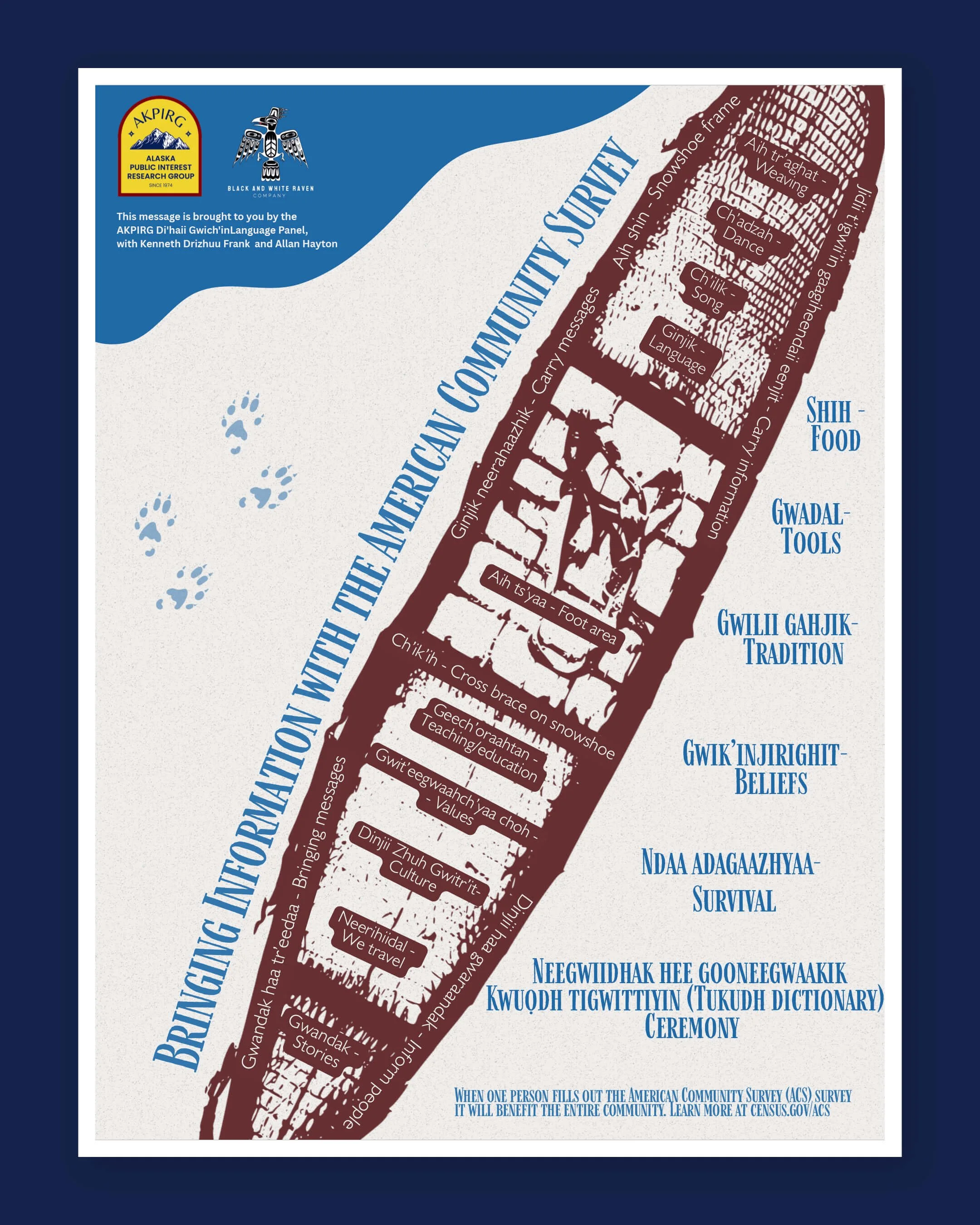
We’re honored to share the next resource in the Alaska Native Languages ACS Toolkit – this time from the Di’haii Gwich’in Language Panel 💚
This poster features a traditional snowshoe, carrying words and meanings in Di’haii Gwich’in – from the parts of the snowshoe itself to the ways messages, traditions, and knowledge are carried by the person who wears it. It’s a reminder that language, like a snowshoe, helps move knowledge forward, connecting people across generations and distance.
If you’re selected to receive the ACS in the mail, you can mark all the languages you speak, including those you’re learning. For Gwich’in speakers and learners, marking your language is one way to carry it forward – supporting greater access to resources, services, and recognition in public spaces.
Mahsì’ choo to our Di’haii Gwich’in Language Panel for sharing your Traditional Knowledge and weaving it into this ACS message!
—
This message is brought to you by the AKPIRG Di'haii Gwich'in Language Panel, with Kenneth Drizhuu Frank and Allan Hayton.
Original snowshoe image from Kenneth Drizhuu Frank. Graphic design in collaboration with Black and White Raven Company (@blackandwhiteravenco)
Healing Gathering in Gwichyaa Zhee 💚
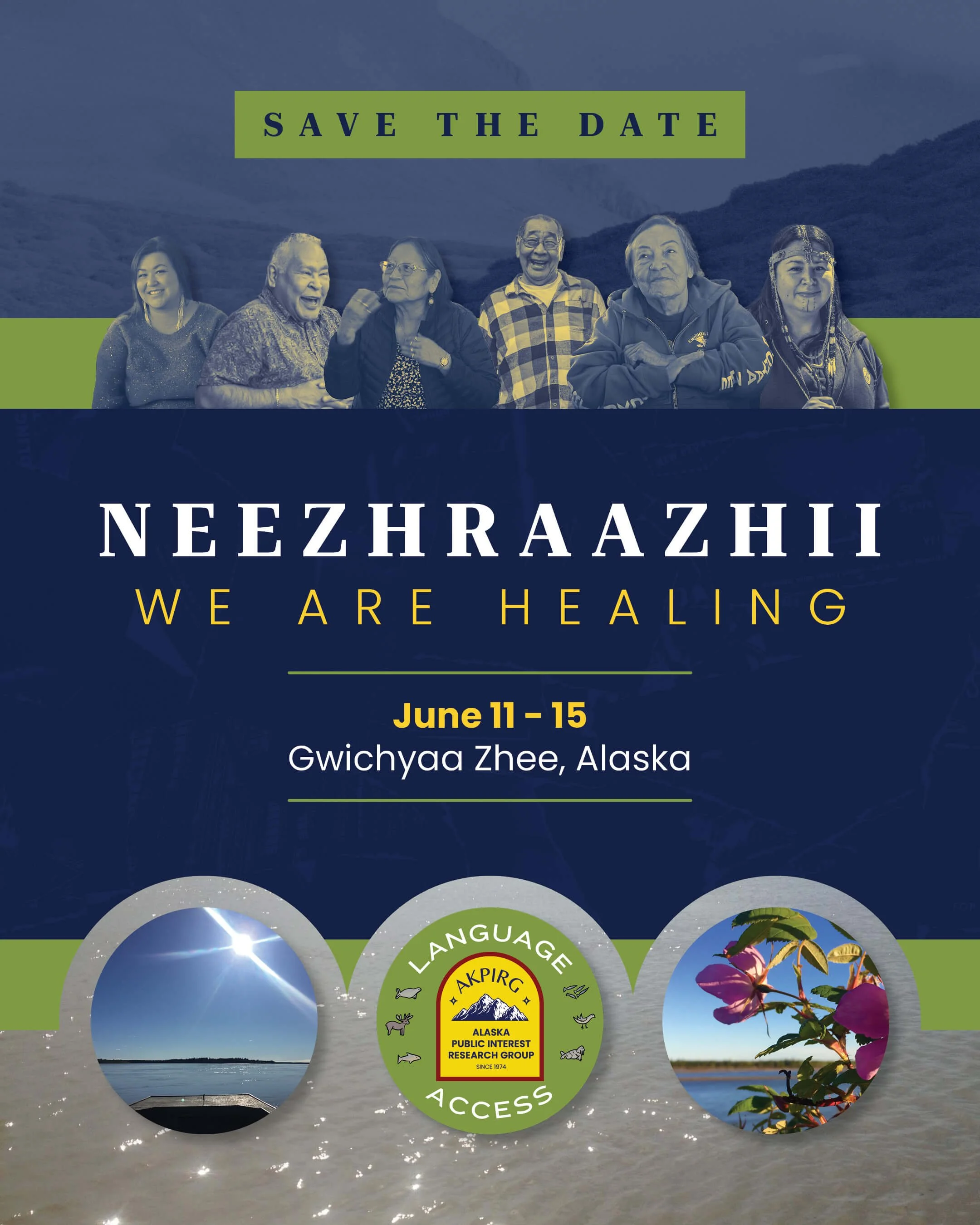
The AKPIRG Language Access Team is hosting a healing gathering in Gwichyaa Zhee (Fort Yukon) this summer, June 11th-15th.
The intention of this gathering is to bring together AKPIRG Language Panelists – language and cultural bearers from across the state – to connect, share and learn from one another. We would like to hold space to share our languages, cultures and teachings with each other with a focus on healing and wellness. Activities include a Yukon River ceremony, language wellness lessons, cultural art workshops such as moose hide tanning, salve making, drumming and song sharing, Native food sharing and community celebration.
Indigenous community members of Gwichyaa Zhee and surrounding villages are also encouraged to attend. Mark your calendar, and keep an eye out for local registration details in the coming weeks!
Travel costs in Alaska are especially high right now - if you or someone you know can help make this healing initiative possible by sponsoring travel for an individual or a group, or by sponsoring a cultural workshop - please reach out to info@akpirg.org, or make a donation.
AKPIRG at the Alaska Infrastructure
Development Symposium ✨
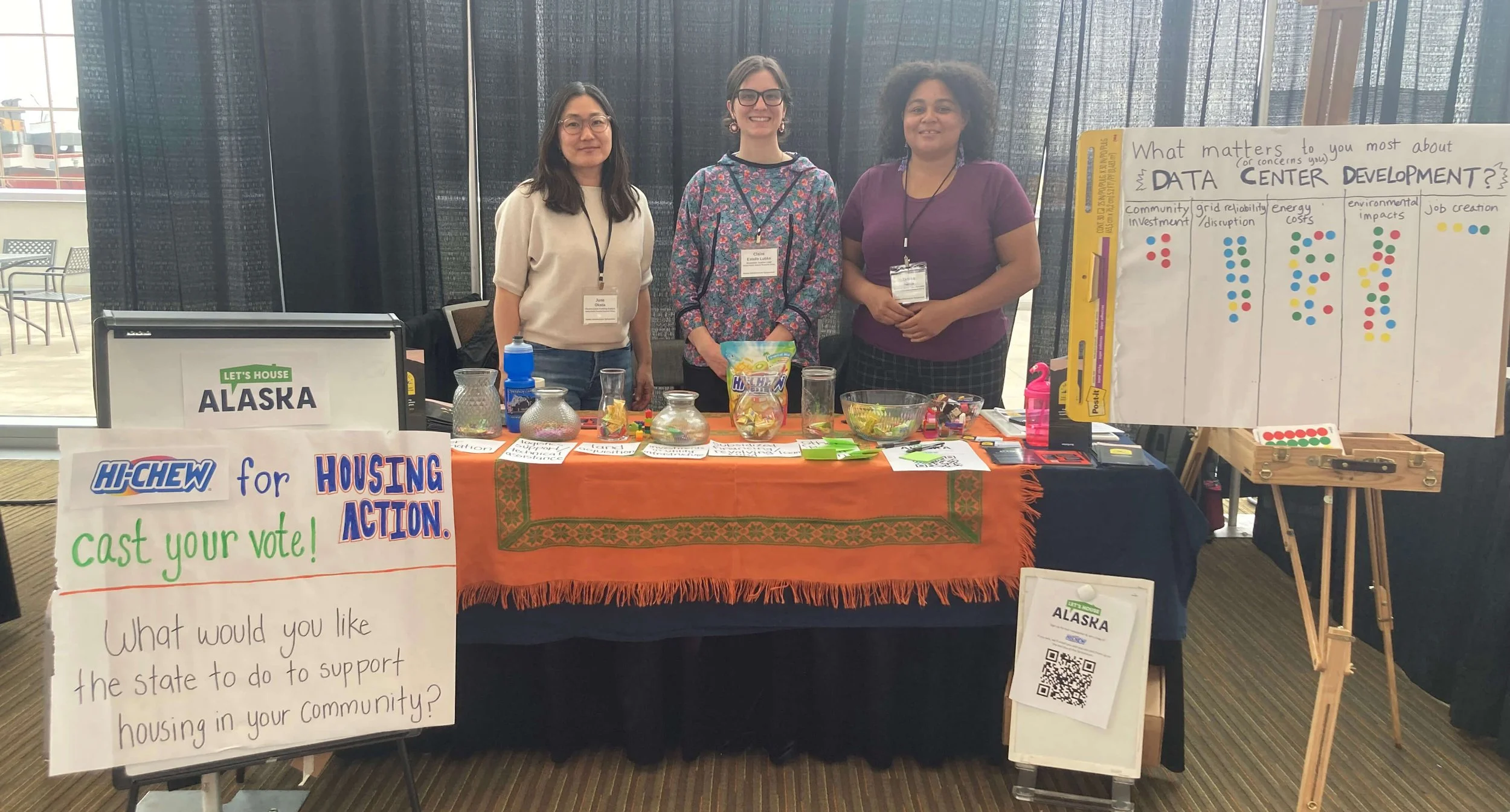
AKPIRG joined partners from across the state at the Alaska Municipal League’s Infrastructure Symposium, where local, state, and national leaders gathered to share updates, tackle challenges, and plan for Alaska’s infrastructure future. The event created space for conversations on everything from project development and asset management to long-term sustainability, and highlighted the importance of community voices in shaping those decisions.
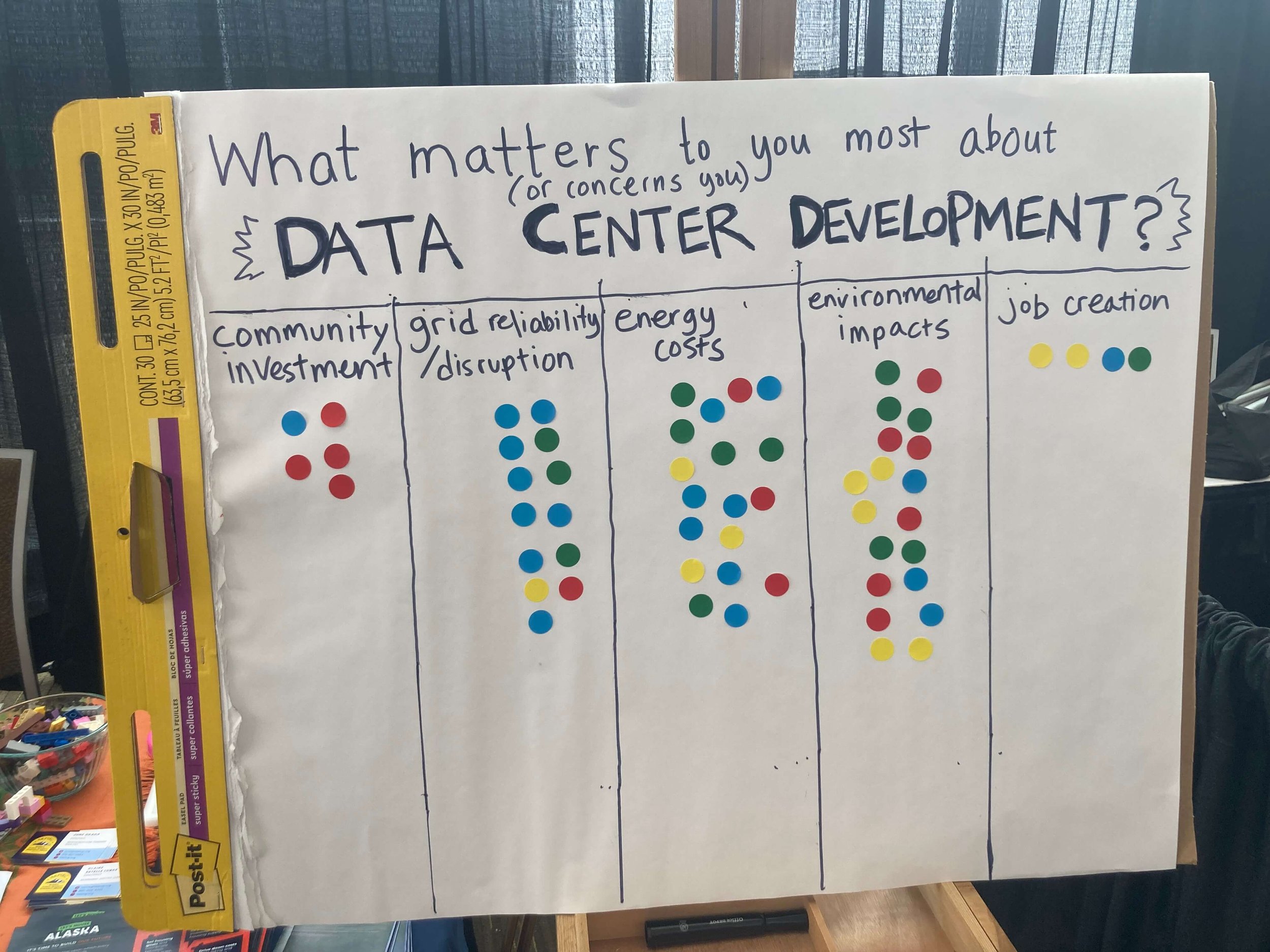
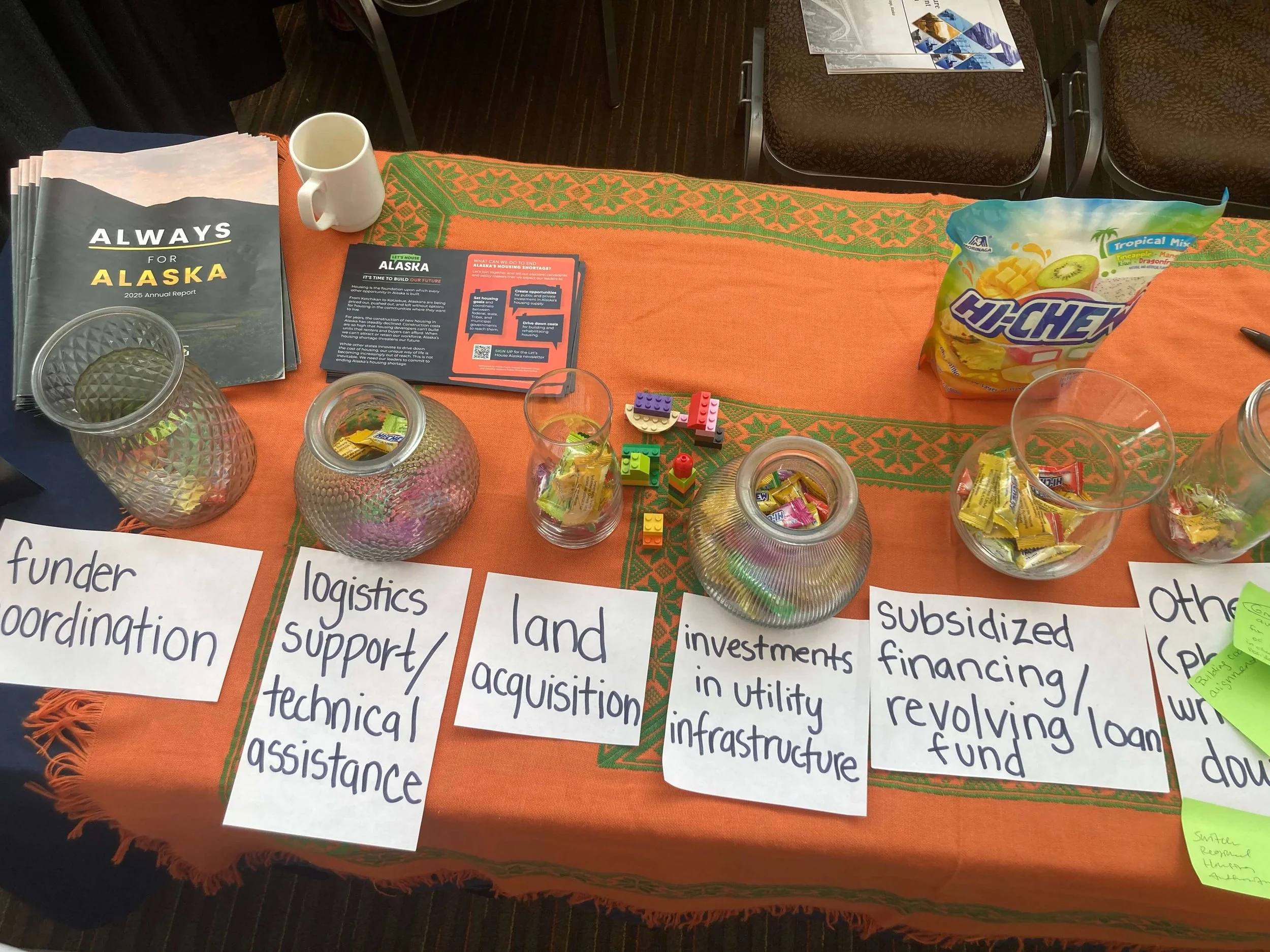
At our table, we soft-launched our new Let’s House Alaska campaign and invited attendees to engage directly through interactive visual surveys. Participants weighed in on what the state can do to better support housing in communities across Alaska, with response ranging from infrastructure investment and land access to technical assistance and coordinated funding. Our energy team also asked folks about what matters most when it comes to data center development, with top considerations including energy costs, grid reliability, environmental impacts, job creation, and community investment.
These conversations, and the insights shared, will help inform our ongoing work to advocate for housing solutions and responsible infrastructure development that truly reflect the needs of all Alaskans.